

New BCYWF Articles Clarify Breast Density & Breast Imaging Myths Among Young Women - What Every Young Woman Should Know

Breaking The Breast Density & Breast Imaging Myths.
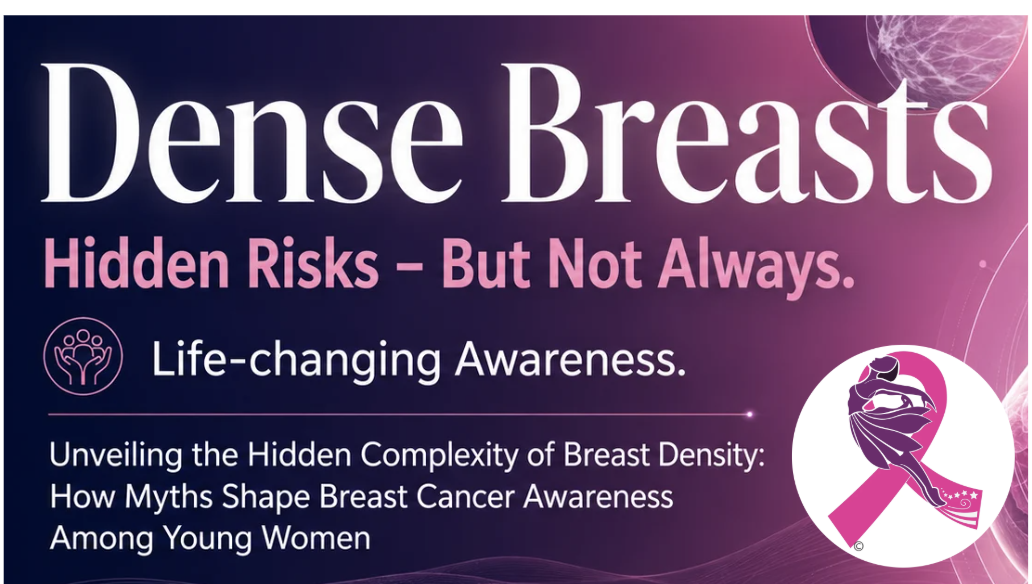
Breaking the Myths About Breast Density.
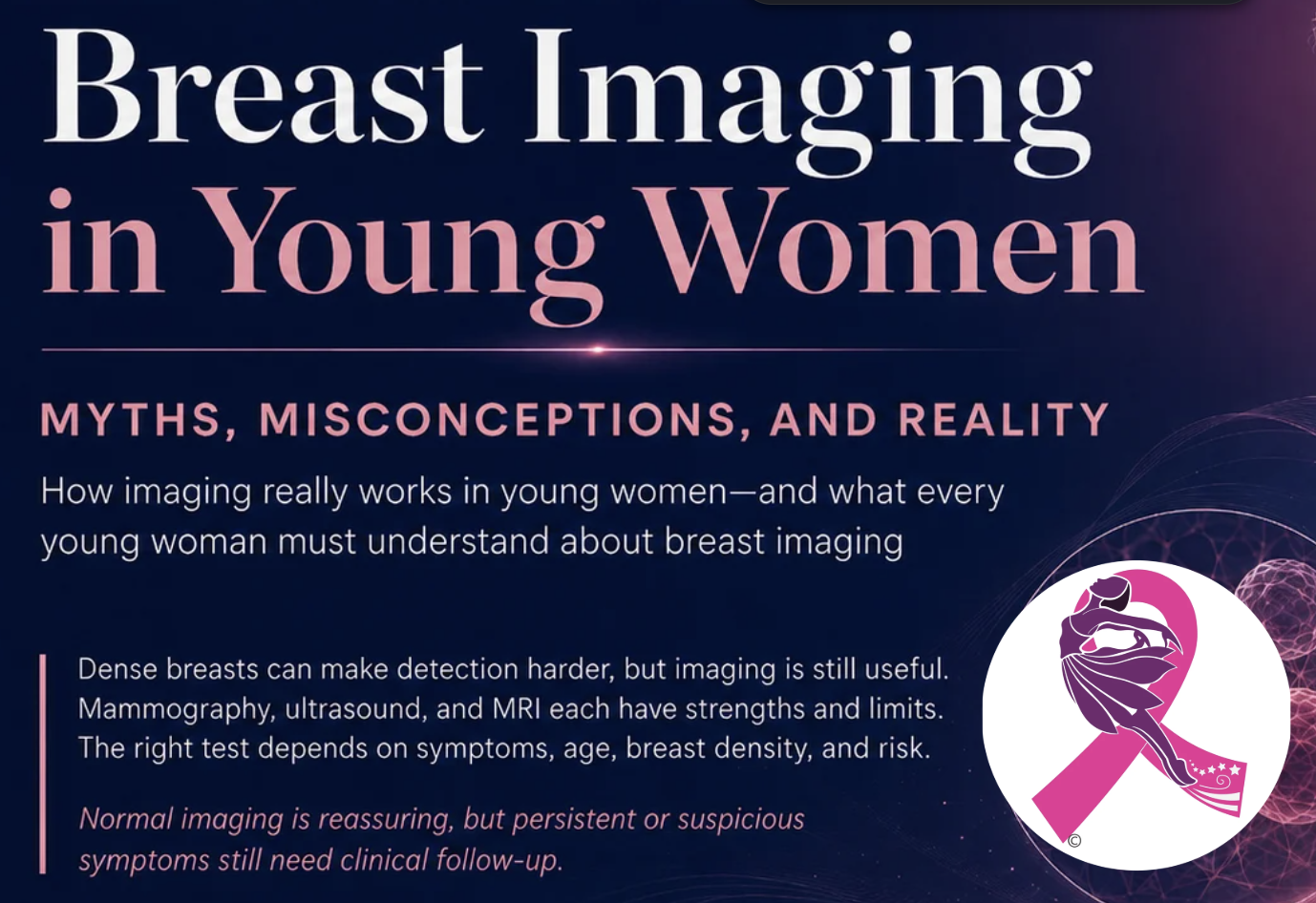
Breaking the Myths About Breast Imaging.

Breast Density, Imaging, and Risks.
Articles clarify why dense breasts, mammograms, ultrasound, MRI, family history, and symptoms should be understood with context—not fear or false reassurance.
DENVER, CO, UNITED STATES, June 30, 2026 /EINPresswire.com/ -- To address gaps in breast health awareness, the Breast Cancer in Young Women Foundation (BCYW Foundation) has released two new, closely connected LinkedIn articles by experts addressing common myths about breast density and breast imaging — both of which are often misunderstood by young women, families, and even within broader breast health awareness conversations.WHY THIS MATTERS
Young women might notice early signs of breast changes, such as lumps, thickening, asymmetry, nipple alterations, or ongoing discomfort. However, many delay consulting a healthcare provider due to common misconceptions: believing they are too young, having no family history, thinking dense breasts render imaging ineffective, or assuming a normal scan means they are fine.
These beliefs can act as decision points that hinder action. The Foundation stresses that awareness should go beyond slogans and offer young women straightforward, balanced, and medically reliable information.
BREAST DENSITY IS IMPORTANT — BUT NOT DESTINY
The first article: “Dense Breasts. Hidden Risks – But Not Always. Life-changing Awareness” (reference 1 below), clarifies that breast density is common among young women but often misunderstood. Dense breasts cannot be evaluated by touch, size, or firmness; they are detected by imaging. The article benefited from the clinical insights and experience of coauthors, Dr. Sunil Saini, MBBS, MS, and Dr. Vijian Dhevan, MD.
The article presents breast density as a risk modifier rather than a diagnosis or predictor of outcomes. While dense tissue can slightly raise the risk of breast cancer and make mammogram readings more challenging, most women with dense breasts do not develop breast cancer. It also highlights the need to differentiate between relative and absolute risk to prevent unnecessary worry or incorrect conclusions.
BREAST IMAGING IS NOT ONE-SIZE-FITS-ALL
The second article, "Breast Imaging in Young Women: Myths, Misconceptions, and Reality” (reference 1 below) explains how mammography, ultrasound, and MRI are utilized in young women. The article benefited from the clinical insights and experience of coauthor, Dr. Samantha Heller, MD, PhD.
It highlights that no single imaging modality is universally "best," as each has its own strengths, limitations, and appropriate applications depending on factors like age, symptoms, breast density, personal risk, and clinical findings.
Mammography remains crucial, especially for detecting microcalcifications that may indicate early disease. Ultrasound is useful for evaluating palpable lumps and distinguishing cysts from solid masses. Although MRI is highly sensitive, it is typically reserved for specific high-risk women rather than used for widespread screening.
THE SHARED MESSAGE: DO NOT IGNORE PERSISTENT CHANGE
Together, the two articles emphasize that breast density and imaging outcomes should be viewed within a larger context. Having dense breasts does not necessarily indicate cancer. While normal imaging results can reassure most women, they should not lead to the automatic dismissal of persistent or significant breast symptoms.
The BCYW Foundation encourages young women to seek medical attention for new, unusual, or ongoing breast issues and to realize that early detection depends not only on technology but also on recognizing changes, asking relevant questions, and choosing the appropriate test at the right time and for the right reasons.
TOWARD A BETTER BREAST HEALTH COMMUNICATION
The Breast Cancer in Young Women Foundation highlights the importance of clear, thorough public education about breast density and imaging. Overly simplified messages can lead to two negative outcomes: unnecessary fear or false reassurance. Young women need information that enhances awareness, encourages timely decisions, and supports personalized, risk-focused healthcare.
FOR FULL DETAILS, readers are encouraged to read these articles on LinkedIn.
Reference 1: “Dense Breasts. Hidden Risks – But Not Always. Life-changing Awareness: Unveiling the Hidden Complexity of Breast Density: How Myths Shape Breast Cancer Awareness Among Young Women” by Rakesh Kumar, PhD, Sunil Saini, MBBS, MS, and Vijian Dhevan, MD
https://www.linkedin.com/pulse/dense-breasts-hidden-risks-always-life-changing-qedmc/
Reference 2: “Breast Imaging in Young Women: Myths, Misconceptions, and Reality: How imaging really works in young women—and what every young woman must understand about breast imaging,” by Rakesh Kumar, PhD and Samantha Heller, MD, PhD.
https://www.linkedin.com/pulse/breast-imaging-young-women-myths-misconceptions-mikxc/
ABOUT THE BCYW FOUNDATION
The Breast Cancer in Young Women Foundation (BCYW Foundation) is a U.S.-based nonprofit public charity organization dedicated to breast cancer in young women. The BCYW Foundation brings together a diverse network of scientists, oncologists, surgeons, survivors, NGOs, and partners from 35 countries. The foundation is advancing its targeted awareness and research efforts and highlighting emerging advances in BCYW through its peer-reviewed, open-access Journal of Young Women's Breast Cancer and Health. More recently, the BCYW Foundation has established the Young Women’s Breast Cancer Research Institute (YWBCRI) to advance research on the early biology, detection, interruption, and prevention of breast cancer in young women. Through evidence-based analysis, the Foundation works to improve outcomes and long-term survivorship horizons for young women diagnosed with breast cancer.
DISCLAIMER: This information is for educational purposes only and is not a substitute for professional medical advice. Please consult a doctor for any concerns or questions.
Rakesh Kumar, Ph.D., Founder and CEO
Breast Cancer in Young Women Foundation
+1 303-900-8066
email us here
Visit us on social media:
LinkedIn
Bluesky
Instagram
Facebook
YouTube
X
Legal Disclaimer:
EIN Presswire provides this news content "as is" without warranty of any kind. We do not accept any responsibility or liability for the accuracy, content, images, videos, licenses, completeness, legality, or reliability of the information contained in this article. If you have any complaints or copyright issues related to this article, kindly contact the author above.
