

NCHE Survey Finds Latinos Believe in America’s Future, Despite Deep Frustration Over Fairness and the Cost of Living


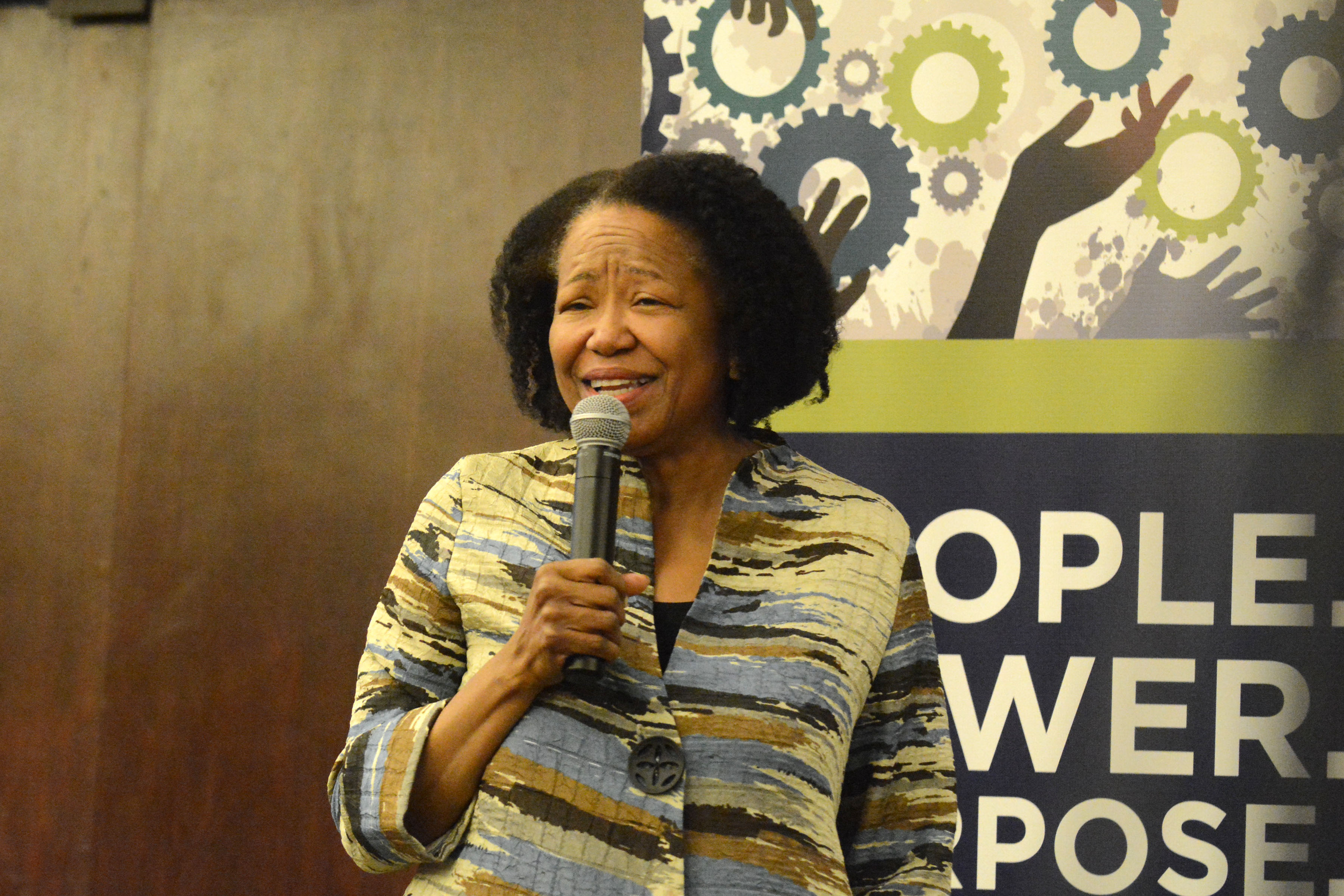
Dr. Gail C. Christopher
Dr. Gail C. Christopher reveals that 71% of Latino Americans are hopeful about the future, 59% call immigration policies unfair and 81% pressured by food prices
WASHINGTON, DC, UNITED STATES, October 23, 2026 /EINPresswire.com/ -- The National Collaborative for Health Equity (NCHE) today published “A Community at a Crossroads: Latinos in America Today,” a new article by Dr. Gail C. Christopher on how Latino Americans see their country at its 250th anniversary. Drawing on NCHE’s Fourth Annual Heart of America Survey, the article portrays a young, fast-growing community that is proud yet wary, frustrated yet hopeful, and deeply invested in America’s future.
The national survey, conducted in June, polled 1,322 Americans, including 220 Latino respondents. Seven in ten Latino respondents were between 18 and 34, so the findings largely reflect young adults still building careers, starting families, and deciding what America owes them and what they owe America. Two-thirds live in the South (34%) and the West (34%), regions where Latino growth has reshaped cities, schools, and local economies for a generation.
“Latinos are telling us something the whole country needs to hear,” said Dr. Christopher, Executive Director of NCHE. “They are not walking away from America. They are asking America to live up to its own promises: fair treatment, a fair hearing, and a fair shot at a stable life.”
Immigration emerges as the defining issue. Current enforcement and deportation measures have devastated families and communities, removing longtime residents and separating families. A clear majority of Latino respondents, 59%, say current immigration policies are unfair, signaling that the Latino community is not satisfied with the status quo. Moreover, 72% of Latino respondents say all immigrants should be guaranteed due process, one of the strongest and most unified positions in the survey.
Dr. Christopher maintains that these numbers describe a community seeking fairness. That view sits squarely in the American mainstream: across all respondents, 85% agree immigration is an important part of American history and culture, 78% say immigrants contribute positively to society, and 87% want the nation to balance welcoming immigrants with securing the border.
“When nearly three in four Latinos say every immigrant deserves due process, they are not staking out a partisan position. They are defending a principle as old as the Constitution,” said Dr. Christopher. “For many young Latinos, immigration is more than a newscast. It is a classmate, a coworker, a face at the dinner table. When the debate is about someone you love, fairness stops being a talking point and becomes a matter of justice.”
On national pride, the findings are more ambivalent. Fifty-four percent of Latinos say they are proud to be American, 24% are neutral, and 23% are not proud. Among White respondents, 80% report pride, a 26-point gap and the widest Latino-White divide in the survey.
Respondents tied pride closely to access and opportunity. “It means a lot because I have access to a lot of opportunities that the people who weren’t born in this country don’t have,” one Latina respondent said. Another warned that “being American is not what it was…everyone (is) scared about whether we will be able to eat our next meal.”
Dr. Christopher said pride grows when people feel seen, protected, and given a real chance to thrive. “That 26-point gap is a measure of lived experience, and it should prompt reflection rather than judgment,” Dr. Christopher said. “Even the Latinos who hesitate on pride are still speaking the language of community and shared purpose. These are people who believe in the American project, even when it is letting them down.”
Despite these frustrations, 71% of Latino respondents say they are hopeful about the future, nearly identical to the 71–72% of White respondents who say the same. After sharp differences on pride and fairness, the two groups stand shoulder to shoulder on hope.
That shared optimism runs through the broader survey. Seventy-six percent of all Americans agree that Americans have more in common than not, 84% believe faith, kindness, and empathy can help the nation overcome its divisions, and 89% want leaders who are “transformers,” able to see past labels and political tricks.
“It is easy to be hopeful when the present feels fair. It is much harder, and much more meaningful, to stay hopeful when you believe the system is stacked against you,” said Dr. Christopher. “That is what Latinos are doing right now. They are critical, but they are not cynical. They want more from America precisely because they still believe America can deliver it.”
Clearly, however, Latinos face a heavy economic burden. Eighty-one percent of Latino respondents report feeling pressure due to the cost of food and groceries. Sixty-four percent feel pressure to find stable, well-paying work, 53% report that elder care costs strain them, and 44% struggle with childcare costs. Across all Americans surveyed, 52% now believe the American Dream is out of reach for most people.
“Health equity begins at the kitchen table,” said Dr. Christopher. “When eight in ten people in a community feel squeezed by the price of groceries, that is more than an economic story. It is a health story, a family story, and a story about whether young people can build the stable lives their parents worked so hard to make possible. You cannot ask people to feel unreserved pride in a country where the basics feel out of reach.”
The article concludes that the Latino community is young enough to shape the country’s direction for decades, large enough to matter in every region, and clear in its values. It wants fairness in immigration and dignity for immigrants, an economy where hard work still buys stability, and a country worth being proud of.
“As America marks 250 years, Latinos are offering the nation a gift: an honest assessment paired with an unbroken belief in what this country can become,” said Dr. Christopher. “Leaders at every level should listen. The path forward is not complicated. Treat people fairly, make the basics affordable, and give every family a real chance to build a future here. Do that, and the hope Latinos carry today becomes the strength of the country tomorrow.”
The full article, “A Community at a Crossroads: Latinos in America Today,” is available on the NCHE website at https://www.nationalcollaborative.org/resource/a-community-at-a-crossroads-latinos-in-america-today/. To receive a copy of the full article to republish in English or Spanish, contact Mike Frisby at Mike@frisbyassociates.com or 202-625-4328.
About the Heart of America Survey
The Heart of America Survey is an annual national study sponsored by NCHE examining how Americans feel about their country, their communities, and one another. The fourth annual survey polled 1,322 Americans in June, including 220 Latino respondents, as the nation approached its 250th anniversary.
The full 4th Annual Heart of America Poll is AVAILABLE HERE.
About the National Collaborative for Health Equity
Launched in 2014, the National Collaborative for Health Equity is a young organization with a long history and body of work. NCHE was incubated in 2005 as the Health Policy Institute, one of several institutes at the Joint Center for Political & Economic Studies. Today, NCHE develops new initiatives to advance the health and racial equity movement while leveraging this history as a national convener and coalition builder for over a decade. NCHE provides an extensive body of data, tools, and resources to equip leaders from historically marginalized and excluded communities to improve the conditions that shape health. These tools include leadership support, policy analysis, data mining and analysis, and community organizing and mobilization to address a range of factors that are the ultimate determinants of health and well-being.
Michael K. Frisby
Frisby & Associates
+1 202-625-4328
mike@frisbyassociates.com
Legal Disclaimer:
EIN Presswire provides this news content "as is" without warranty of any kind. We do not accept any responsibility or liability for the accuracy, content, images, videos, licenses, completeness, legality, or reliability of the information contained in this article. If you have any complaints or copyright issues related to this article, kindly contact the author above.
